
Accelerators
Reusable delivery assets for enterprise cloud and AI initiatives
nimbus180 accelerators are production-grade, reusable frameworks used to reduce time-to-value, lower delivery risk, and enforce architectural consistency across engagements. They are not off-the-shelf software products — they are activated through solution and service engagements and tailored to each client’s environment.
Why Accelerators Matter
Enterprise initiatives fail not because of lack of technology, but because teams repeatedly rebuild the same foundations.
nimbus180 accelerators help organizations:
- •Shorten delivery timelines without cutting corners
- •Enforce architectural and governance standards
- •Reduce implementation risk across regions and teams
- •Move from bespoke builds to repeatable execution
Accelerator Catalog
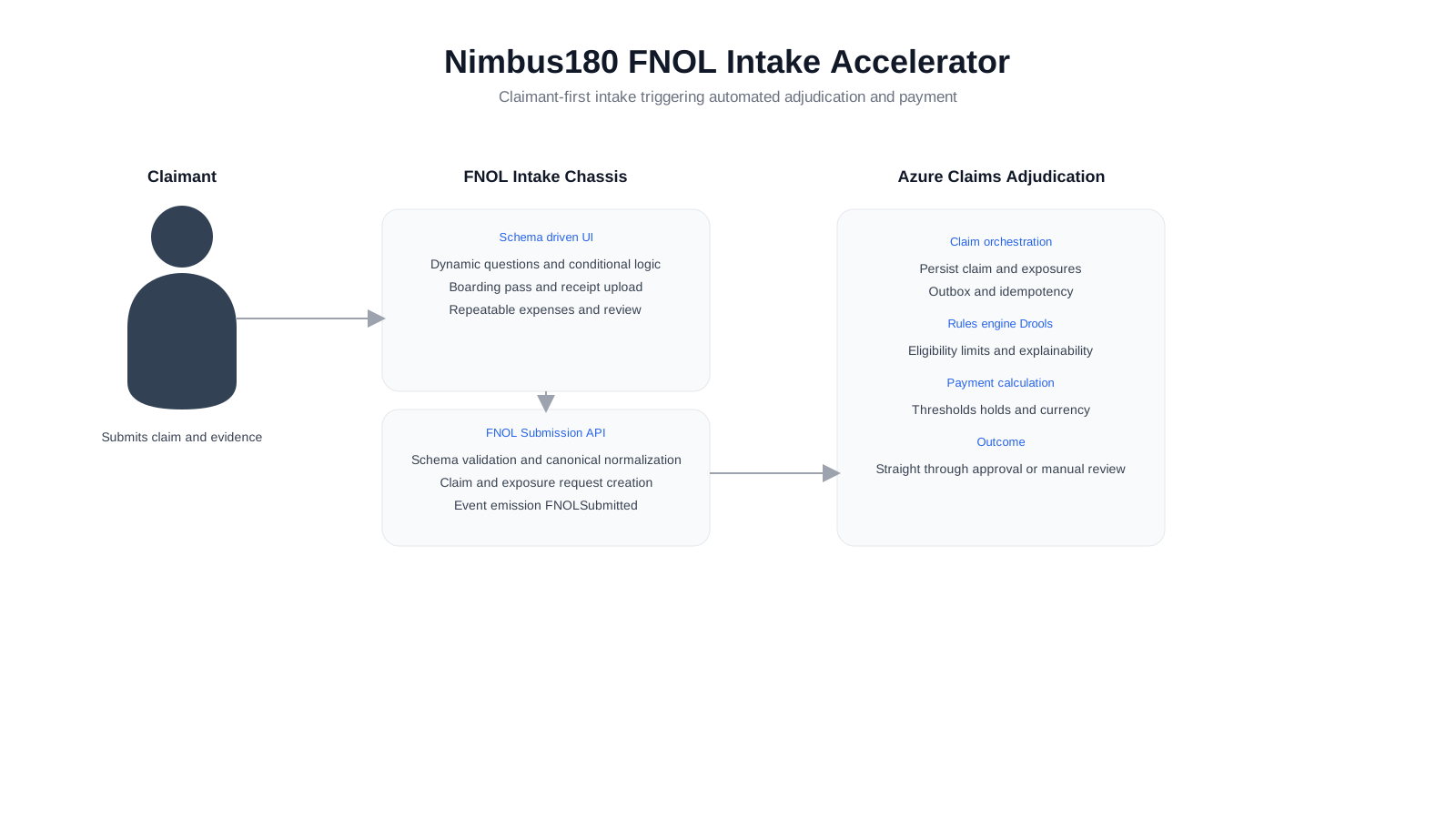
FNOL Intake Accelerator
Purpose
Intelligent first notice of loss processing with AI-powered triage and routing
Outcomes
Reduce intake time, improve routing accuracy, reduce leakage
Capabilities
- •Multi-channel intake orchestration (web, mobile, phone, email)
- •AI-powered loss classification and severity assessment
- •Automated party and coverage identification
- •Smart assignment and routing to claims handlers
- •Real-time validation and data quality checks
Used for
- •Claims intake modernization
- •Contact center automation
- •Omnichannel FNOL experiences
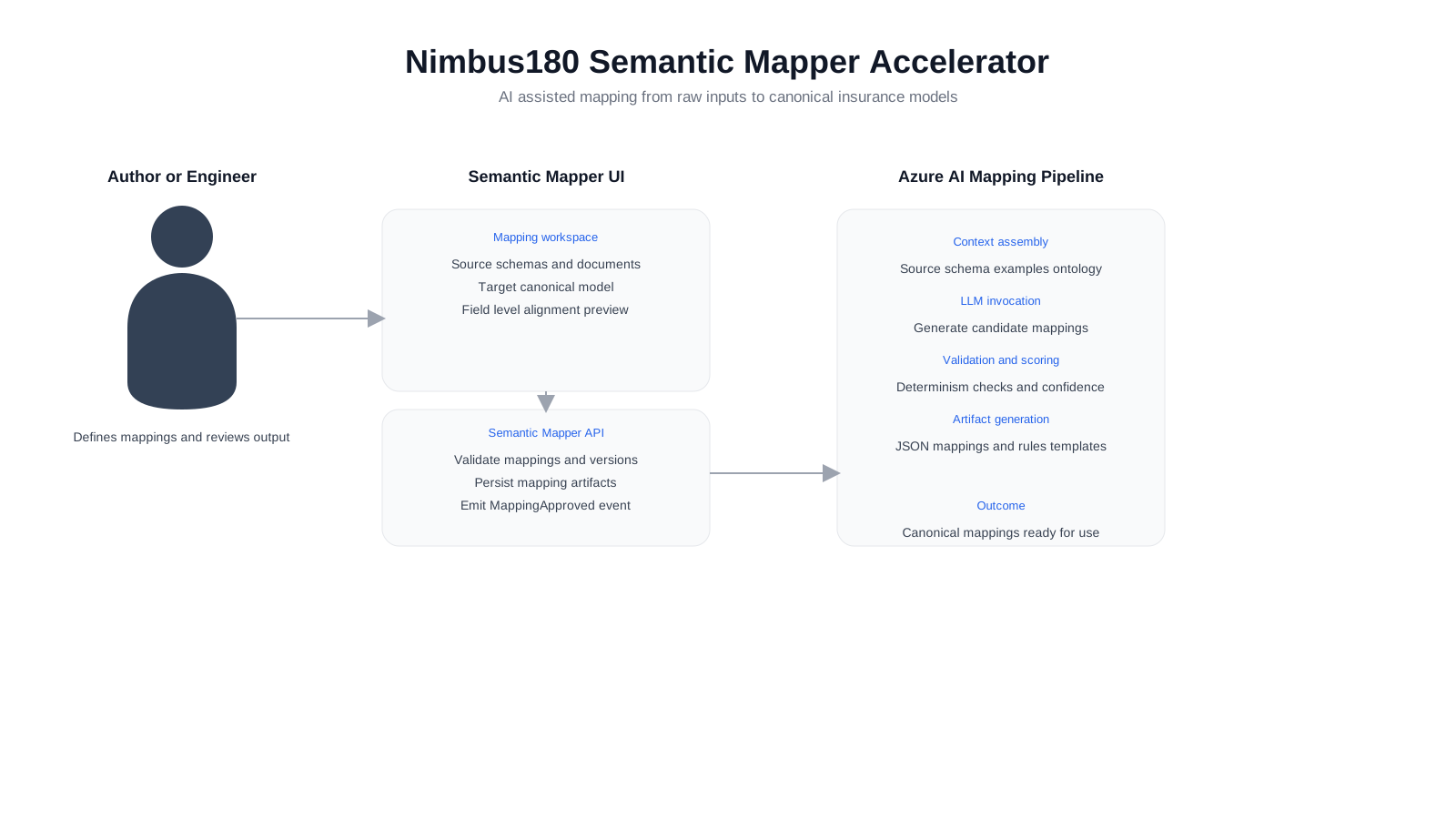
Semantic Mapper Accelerator
Purpose
Deterministic data normalization for STP and decision automation
Outcomes
Normalize claims data, improve STP eligibility, reduce integration churn
Capabilities
- •Canonical schema and ontology definitions
- •Mapping DSL / JSON schemas
- •RAG-assisted mapping generation with provenance
- •Validation, confidence scoring, and replay
- •Regression harness for safe change management
Used for
- •STP enablement
- •Multi-product or multi-region normalization
- •FNOL and intake standardization
STP Decision Automation Framework
Purpose
Governed automation of business decisions at scale
Outcomes
Repeatable rule lifecycle, safe promotion, audit-ready decisions
Capabilities
- •Business intent → rule plan pipeline
- •Drools / KIE artifact generation
- •Simulation and regression testing
- •Approval workflows and versioning
- •Deterministic promotion across environments
Used for
- •Claims and underwriting automation
- •Policy eligibility and adjudication
- •Rule governance programs
AI Gateway Blueprint
Purpose
Safe, observable, and governed use of foundation models
Outcomes
Safe structured outputs, observable prompts, consistent governance
Capabilities
- •Azure OpenAI integration patterns
- •Structured LLM outputs (JSON-first)
- •Prompt and schema versioning
- •Guardrails, audit, and telemetry hooks
- •RAG integration patterns
Used for
- •AI-assisted authoring
- •Semantic mapping
- •Decision support systems
AKS Platform Blueprint
Purpose
Secure and repeatable Kubernetes foundations on Azure
Outcomes
Reduce platform lead time, secure defaults, faster team onboarding
Capabilities
- •Terraform-based infrastructure modules
- •AKS baseline architecture
- •Identity, networking, and security defaults
- •CI/CD pipelines and Helm charts
- •Observability and operational guardrails
Used for
- •Platform modernization
- •Multi-team enablement
- •Regulated or enterprise environments
How Accelerators Are Delivered
nimbus180 accelerators are delivered as part of engagements and include:
- •Deployment into the client’s Azure environment
- •Configuration for domain and operating model
- •Knowledge transfer and documentation
- •Optional handoff to internal teams
Accelerators are not licensed software and are not sold standalone.
Engagement Models
Accelerators are typically provided through:
Solution engagements
e.g., STP Enablement, AI Decision Automation
Architecture & delivery services
e.g., platform foundation builds, governance programs
Fixed-scope accelerator activations
time-boxed enablement with handoff
Looking to reduce delivery risk and accelerate outcomes?
Let’s discuss how nimbus180 accelerators can support your initiative.